10 Best Plantar Fasciitis Exercises for Fast, Lasting Relief
10 Best Plantar Fasciitis Exercises for Heel Pain Relief
Medical disclaimer: This article is for informational purposes only and isn’t a substitute for professional medical advice, diagnosis, or treatment. Always talk to a podiatrist or foot and ankle specialist about your specific symptoms.
You know the feeling. You swing your legs out of bed, take those first few steps toward the coffee maker, and — ouch. That stabbing pain in your heel again. If that’s your morning routine lately, you’re probably dealing with plantar fasciitis, and you’re definitely not alone. It’s one of the most common reasons people end up Googling “why does my heel hurt so much.”
Here’s the good part: plantar fasciitis almost always gets better with the right combination of plantar fascia stretches and foot strengthening exercises. You don’t need fancy equipment or a physical therapy degree — just a few minutes a day and some consistency. Below are the 10 heel pain exercises that actually make a difference, plus what to avoid, how to prevent it from coming back, and a realistic timeline for recovery.
One quick note before we dive in: if your pain is severe, sudden, or just isn’t budging after a few weeks of doing these, it’s worth getting checked out by a podiatrist or foot and ankle specialist. No stretch replaces a real diagnosis.
What Causes Plantar Fasciitis?
Plantar fasciitis is inflammation of the plantar fascia, the thick band of tissue connecting your heel to your toes. According to Mayo Clinic, it develops when this tissue is repetitively stretched, leading to small tears and irritation, and it’s especially common in people who spend long stretches of the day on their feet.
A few things raise your risk:
- Repetitive impact — running, walking, or standing for long periods, especially on hard surfaces
- Foot mechanics — both flat feet and high arches change how force travels through your foot, which is part of why understanding your specific arch type matters for treatment
- Tight calves and Achilles tendons — reduced ankle flexibility increases strain on the plantar fascia with every step
- Age and activity level — most common in middle-aged, active adults
- Occupation — jobs that keep you standing or walking most of the day carry a notably higher risk
- Excess body weight — added weight increases the load on the plantar fascia with every step
Knowing your specific risk factors helps you treat this at the source instead of just managing symptoms as they come up.
Plantar Fascia Stretches for Immediate Relief
These three target the inflamed tissue directly and are the best place to start, especially first thing in the morning.
1. Calf Stretch Against a Wall
This is usually the first thing doctors have you do, and for good reason — tight calves pull on your Achilles tendon, which pulls on your plantar fascia. Loosen one, help the other.
- Stand facing a wall, hands pressed against it around shoulder height.
- Step one foot back, keeping that leg straight with the heel flat on the floor.
- Bend your front knee and lean in until you feel the stretch through your back calf.
- Hold 30 seconds, do it 3 times per leg.
2. Towel Stretch
Do this one before you even get out of bed. Since your plantar fascia tightens up overnight, easing into it before your feet hit the floor can take the edge off that first painful step.
- Sit on the edge of your bed with your leg out in front of you.
- Loop a towel around the ball of your foot.
- Gently pull it toward you, keeping your knee straight, until you feel the stretch along your arch and heel.
- Hold 30 seconds, repeat 3 times per foot.
3. Plantar Fascia Stretch (Toe Pull)
This one goes straight after the inflamed tissue itself, and it’s simple enough to do anywhere — at your desk, on the couch, wherever.
- Sit down and cross the sore foot over your opposite knee.
- Grab your toes and pull them gently back toward your shin.
- You’ll feel it right along your arch.
- Hold 15-20 seconds, repeat 3-5 times.
Massage and Myofascial Release
A step beyond stretching — these work best once the sharpest pain has calmed down a little.
4. Frozen Water Bottle Roll
Cold plus gentle massage is a nice one-two punch for calming down inflammation, and it feels genuinely good after a long day on your feet.
- Freeze a water bottle ahead of time.
- Sit in a chair and roll it under your arch.
- Go back and forth for 5-10 minutes with light to moderate pressure.
- It should feel soothing, not painful — ease up if it’s too intense.
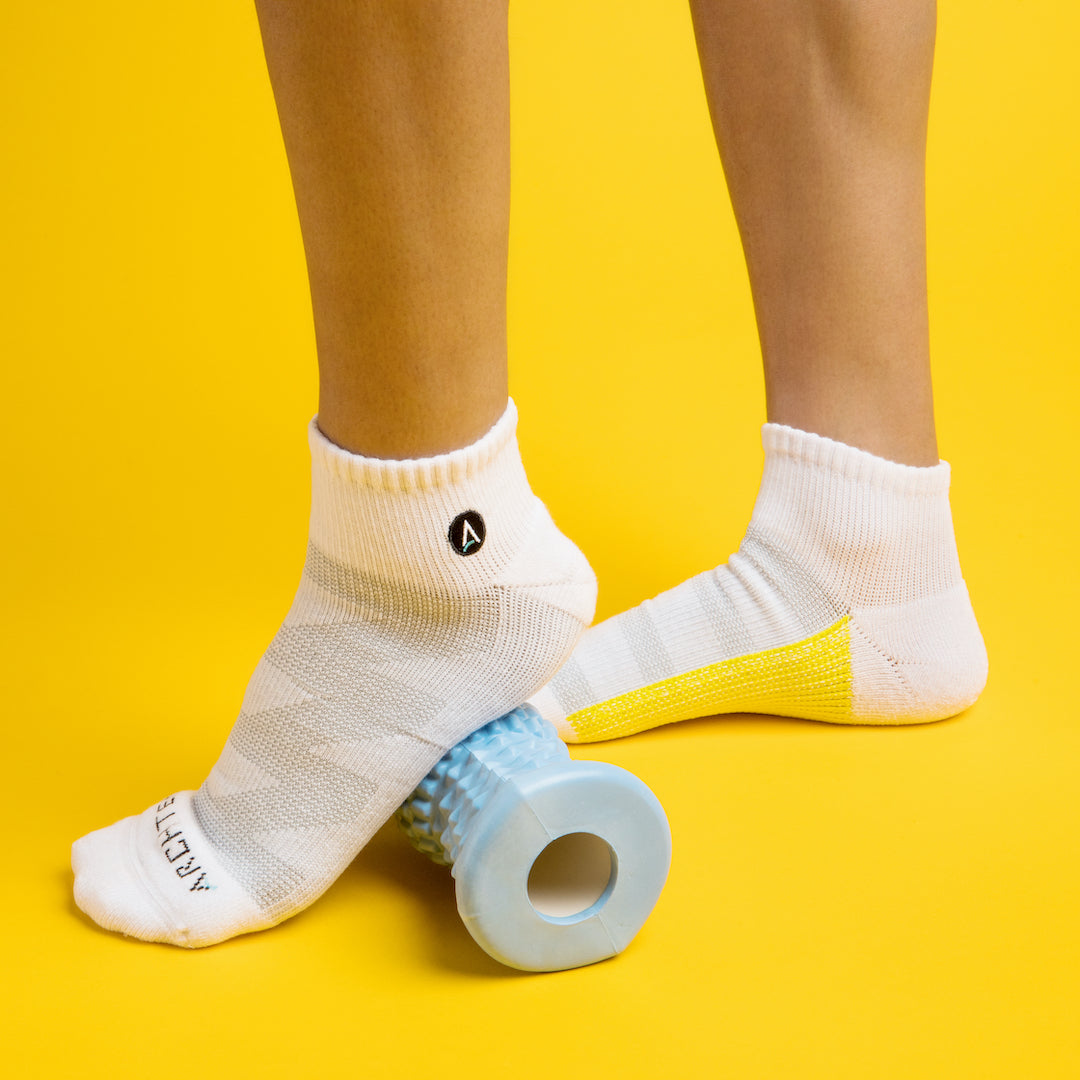
5. Golf Ball or Massage Ball Roll
Once the sharpest pain has calmed down, this gives you a deeper release than the frozen bottle.
- Sit or stand near something you can hold onto for balance.
- Put a golf ball or firm massage ball under your arch.
- Roll slowly from heel to toe, pausing wherever it feels tight or tender.
- Keep going for 2-3 minutes per foot.
Foot Strengthening Exercises
Stretching loosens things up; these build the muscles that actually hold your arch together over the long run.
6. Toe Curls (Towel Scrunches)
This looks a little silly, but it builds up the small muscles in your foot that actually hold your arch together over time.
- Sit with a towel laid flat on the floor in front of you.
- Set your bare foot on one end.
- Scrunch the towel toward you using just your toes, then let go and reset.
- Do 10-15 reps, 2-3 sets per foot.
7. Marble Pickups
Another one that feels silly and works surprisingly well — it’s basically a workout for your toes.
- Scatter 15-20 marbles across the floor with a bowl next to them.
- Using only your toes, pick up one marble at a time and drop it in the bowl.
- Keep going until they’re all collected, then switch feet.
8. Seated Toe Raises
A simple way to build strength on the top side of your foot, which helps take some of the load off your arch.
- Sit with your feet flat on the floor.
- Keep your heels down and lift just your toes as high as you can.
- Hold for 2-3 seconds, then lower slowly.
- Repeat 10-15 times, 2-3 sets.
9. Standing Arch Lift (Short Foot Exercise)
This is a bit trickier to get the hang of, but it’s one of the best exercises for actually rebuilding arch support long-term.
- Stand barefoot with your weight spread evenly across your foot.
- Without curling your toes, try to “shorten” your foot by drawing the ball of your foot back toward your heel, lifting your arch slightly.
- Hold 5 seconds, relax, repeat 10 times per foot.
Deeper Stretches Once Pain Eases
10. Achilles Tendon Stretch with a Step
A deeper version of the wall stretch, once your pain has eased up enough to handle it.
- Stand on a step with your heels hanging off the back edge.
- Hold a railing for balance.
- Slowly lower your heels below the step until you feel the stretch.
- Hold 15-30 seconds, repeat 3 times.
Exercises to Avoid With Plantar Fasciitis
Not every workout is safe while you’re healing. High-impact activity is the main thing to steer clear of until symptoms improve:
- Running and jogging, especially on hard surfaces or inclines
- Jumping and plyometrics — box jumps, jump rope, burpees, and jump squats all create repeated pounding through the heel
- High-impact aerobics or step classes
- Heavy squats and lunges, particularly jumping variations, which increase tension through the arch
- Long walks on hard surfaces during a flare-up — short walks in supportive footwear are generally fine, but distance on concrete can aggravate symptoms
Low-impact alternatives like swimming, cycling, and the elliptical let you stay active without the repetitive pounding that slows healing.
How to Prevent Plantar Fasciitis From Coming Back
- Stretch before your first step, not after. Your plantar fascia tightens overnight, so a couple of these stretches before you even stand up can make a noticeable difference in that first-step pain — here’s exactly why mornings hurt more if you’re curious about the mechanism.
- Consistency beats intensity. Doing a little bit every day for 2-3 weeks will get you further than one brutal session.
- Increase training load gradually. A sudden jump in mileage or standing time is one of the most common triggers for a flare-up.
- Replace worn-out footwear. Shoes lose cushioning long before they look worn, and unsupportive shoes are a well-documented risk factor.
- What you do for the other 23 hours matters too. Stretching loosens things up, but your feet still need support the rest of the day — especially if you’re on them a lot. Here’s how to speed up healing naturally if you want the fuller recovery picture.
How Long Does Recovery Take?
Most people see real improvement within 2-6 weeks of consistent stretching and support, though more stubborn cases can take a couple of months. The biggest factor isn’t how bad the pain is — it’s consistency, and not rushing back into high-impact activity too soon. For a full week-by-week breakdown of what to expect at each stage, see the complete plantar fasciitis recovery timeline.
Frequently Asked Questions
How long does plantar fasciitis take to heal?
Most mild to moderate cases improve within 2-6 weeks with consistent stretching and support. See the full recovery timeline for a stage-by-stage breakdown.
Can I still exercise with plantar fasciitis?
Yes, but stick to low-impact activity like swimming, cycling, or the elliptical, and avoid running, jumping, and high-impact aerobics until symptoms ease up.
What’s the fastest way to relieve plantar fasciitis pain?
A combination of morning stretching, ice, and reducing high-impact activity brings the fastest relief. Consistency matters more than any single exercise.
Do compression socks help with plantar fasciitis exercises?
They can support your arch and reduce strain between stretching sessions, though they work best alongside — not instead of — the exercises above. Here’s a closer look at how compression socks help.
Should I stretch before or after exercise?
Both matter, but stretching before your first steps in the morning specifically targets the tightening that happens overnight, which is when plantar fasciitis pain is typically at its worst.
Is walking bad for plantar fasciitis?
Short walks in supportive footwear are usually fine. Longer walks on hard surfaces during a flare-up can aggravate symptoms, so scale back distance until pain settles down.
The Sock That Picks Up Where Stretching Leaves Off
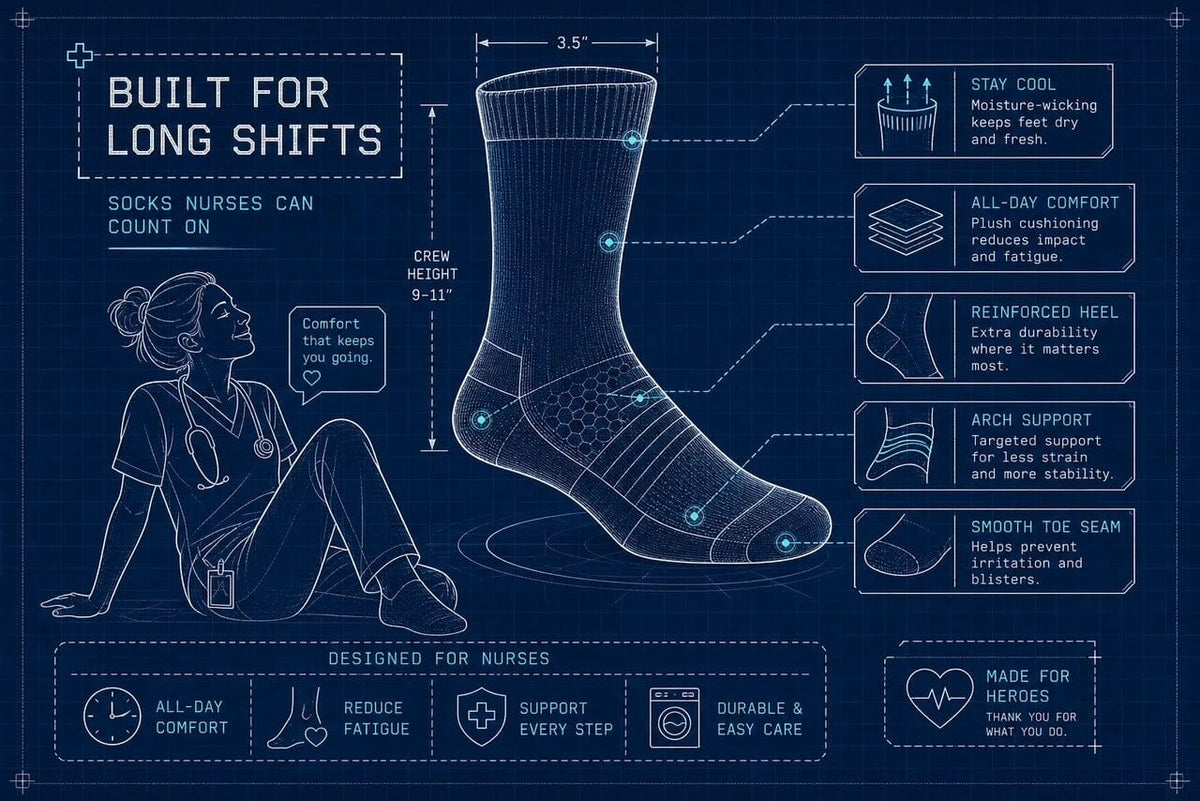
Here’s the honest limitation of any stretching routine: it works for the ten minutes you’re doing it, and then your shoes go back on and your foot goes back to carrying you around for the next sixteen hours. That’s the actual gap ArchTek was built to close.
Dr. Bob Baravarian spent over 25 years as a foot and ankle surgeon watching this exact pattern play out with his patients — people doing everything right with stretches and physical therapy, then undoing some of it the moment they were back on their feet all day without support. So the sock itself works a lot like the exercises above: patented 5-layer arch compression that actively holds your arch instead of just padding it, an Energy Return System that absorbs the impact your heel would otherwise take with every step, and extra cushioning around the Achilles, since tight calves and heel pain almost always show up together.
Do the stretches. Let the sock handle the other sixteen hours. If you’re deciding between a full compression sock and a basic arch sleeve, or want the specifics on how compression helps plantar fasciitis, both are worth a read. You can also shop ArchTek’s full arch support sock collection directly.
References - Mayo Clinic Health System — Heel pain might be plantar fasciitis
- Mayo Clinic Orthopedics & Sports Medicine — Plantar fasciitis overview